
Cooking Classes in Kathmandu: a Traveller's Guide
A cooking class is one of the best half-days you can spend in Kathmandu — you leave with a real skill, a meal you made yourself, and a much better understanding of the food you've been eating all trip. But classes vary a lot, from big tourist demonstrations to small private kitchens. Here's how they work, what they cost, and how to pick one that's actually worth your time. Already decided? The class we run is a private momo session for 2–6 in a working café kitchen, £35pp.
What you'll typically cook
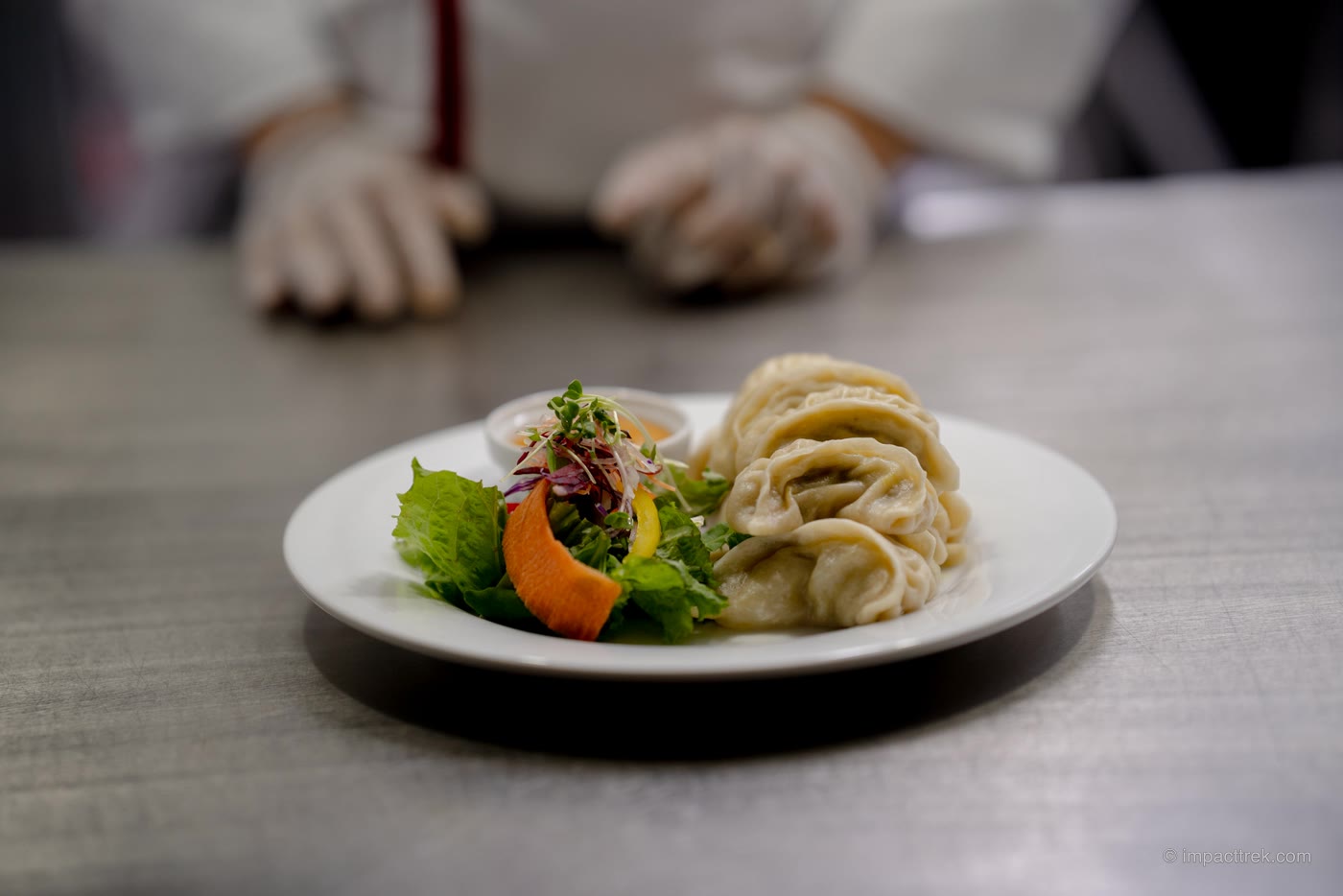
You'll see a few dishes on offer — dal bhat (the lentil-and-rice plate that fuels the country), the odd curry or chai — but the one nearly every traveller wants to learn is momo, the steamed dumplings Nepal is famous for. If you only learn one Nepali dish, make it momo: it's the dish Nepalis gather around, and it's the most satisfying one to make with your own hands. Some classes try to cram a three-course menu into a single session; the better ones pick one dish and teach it properly, start to finish. For most travellers, doing momo well beats rushing through five dishes you'll never cook again.
What a good momo class covers
Momo looks intricate, but it's really four parts — and a class worth taking will teach you all of them, start to finish, rather than handing you a pre-made shortcut:
- The dough and wrappers. Mixing and resting the dough, then rolling thin, even wrappers by hand — where a good momo and a great one part ways.
- The spiced filling. Building chicken or vegetable filling with fresh ginger and garlic and whole spices like cumin and coriander, ground rather than shaken from a jar.
- The fold. The pleated fold that seals each momo — fiddly at first, then oddly satisfying, and the part a chef beside you fixes in minutes.
- The achar. The fiery tomato-and-sesame dipping chutney that makes a momo unmistakably Nepali — half the pleasure of the dish, made from scratch.
If a class skips any of these — buying the wrappers in, or plating an achar made earlier — you're watching a demo, not learning to cook. Check what you'll actually make with your own hands before you book.
Formats and prices
As a rough guide for 2026, classes in Kathmandu tend to fall into a few bands:
- Budget group classes (~$15–20): larger groups, often 10–16 people, frequently a multi-dish menu and sometimes a market visit. Great value, but you share the teacher's attention with a crowd.
- Mid-range and private classes (~$30–50): smaller groups or private sessions, more hands-on time, a calmer pace. You actually cook rather than watch.
Price isn't everything — the real variable is how much you cook with your own hands versus how much you watch someone demonstrate. For a genuinely hands-on, small-group session, the mid-range band is the value sweet spot: a little more than a crowded budget class, and a completely different experience. Ask that question before you book.
Group size matters more than you'd think
In a class of 14, you'll spend a lot of time waiting your turn and watching over shoulders. In a small private class capped at six and never shared with strangers, the chef can correct your dough, your folding and your spicing in real time — which is the entire point of taking a class instead of watching a video. And you don't need any experience: a small group is exactly where a complete beginner learns fastest, because someone's actually watching your hands. If hands-on learning matters to you, prioritise group size over almost anything else.
Demonstration vs. a working kitchen
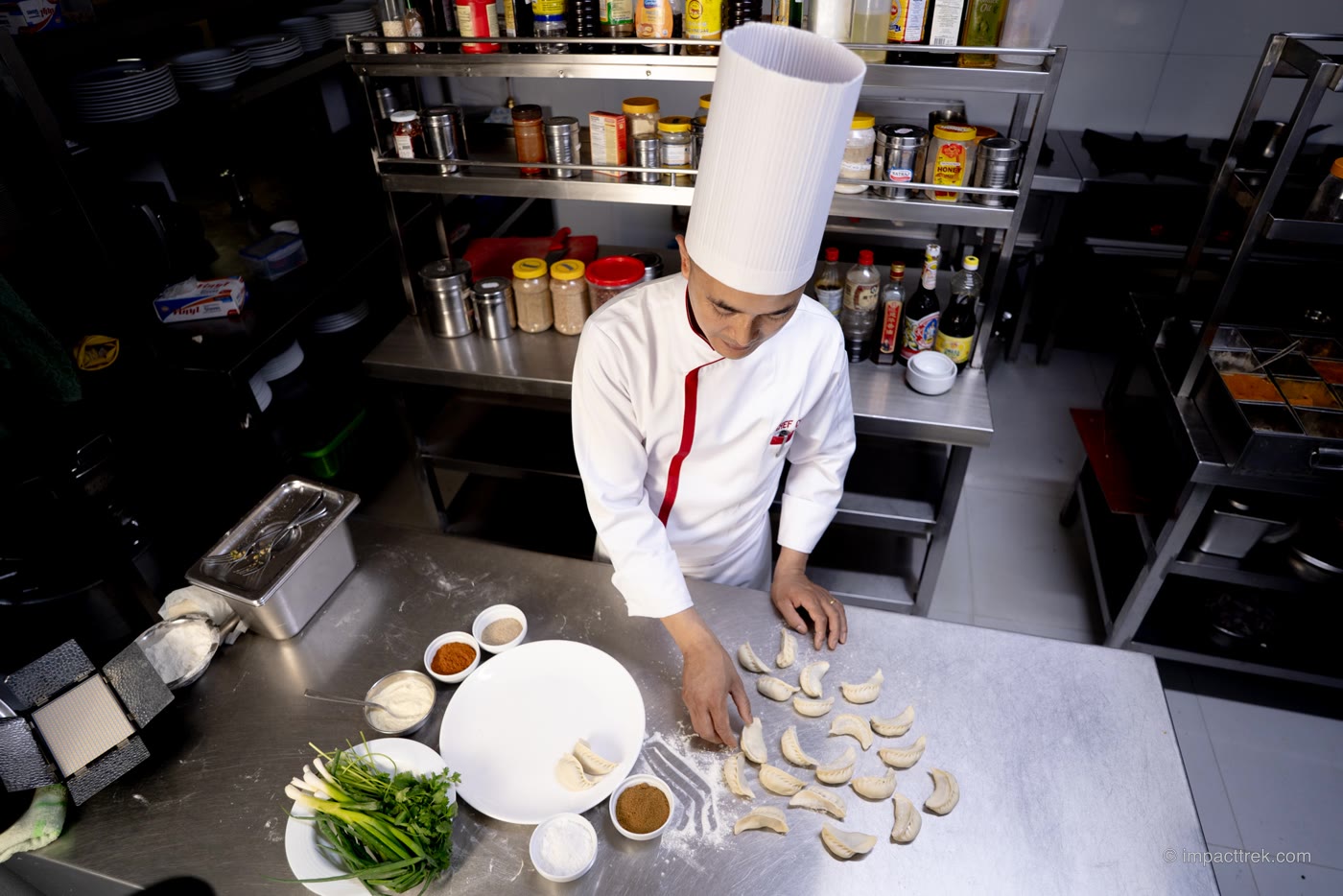
Some classes run in purpose-built "tourist" kitchens; others take place in a real working café or home kitchen. A working kitchen gives you the genuine setting, the proper equipment and the everyday food-safety standards a busy café runs on — and it usually feels far more authentic than a demonstration room set up for visitors.
That's the class we run: a private session for your own group of 2–6 in chef Chhetra Shrestha's working café kitchen, with an English-speaking translator throughout. £35pp.
See the class →How it fits a sightseeing day
A two-hour class slots neatly around Kathmandu's main sights. Many classes — ours included — run an evening session (around 6–8pm) any day of the week, which is ideal when your daytime is taken up with sightseeing, trekking logistics or clinical hours: you finish the day with the dinner you cooked yourself. If you'd rather keep your evening free, look for a weekend midday slot (12–2pm) and pair it with an afternoon at the city's great stupas and temples.
Dietary needs and vegetarians
Nepali cuisine is very vegetarian-friendly — dal bhat is naturally veg, and momo come in vegetable and vegan versions. Any good class will let you choose a chicken or vegan filling and adapt for allergies, but mention your needs when you book rather than on the day.
Practical things to check before you book
- Location and getting there. Most classes are a short taxi ride from Thamel in central Kathmandu; confirm the address and whether a map pin and directions are provided when you book.
- What's included. Ingredients, a recipe card and a certificate to take home, the meal itself, an apron — and whether you actually eat what you cook (you should).
- Language. If the chef's English is limited, check there's a dedicated English-speaking translator on hand — it's the difference between following every step and just copying what you see.
- Cancellation policy. Free cancellation up to 48 hours before is standard.
- Payment. Many classes take cash on the day in rupees or major currencies, with nothing to pay upfront; check before you arrive.
Whichever class you choose, remember what you're really after: a restaurant gives you a good meal and it's gone by morning; a class gives you the skill, the story behind the dish, and something you can cook for friends back home. That's the whole reason it's worth a couple of hours of your trip.
Our take: a small, hands-on momo class
Impact Trek runs a Nepali momo cooking class in Kathmandu built around the priorities above: a private session for your own group of 2–6, in a working café kitchen, led by chef Chhetra Shrestha — who runs four Kathmandu cafés. Your group cooks one filling per session (chicken or vegan); you hand-fold and steam your own momo, sit down and eat them, and leave with a recipe card and a certificate. £35 per person. Travelling solo? We'll happily help you pair up — minimum two.
See the class & pricing →