
Momo: the Story Behind Nepal's Favourite Dumpling
Ask anyone in Kathmandu what they'd happily eat every single day and the answer is almost always the same: momo. These little steamed dumplings are Nepal's true national comfort food — sold from street carts and fine restaurants alike, made at home for guests, and argued over endlessly when it comes to whose are best. But momo aren't originally Nepali at all. Here's how a Himalayan dumpling became the heart of Nepali food.
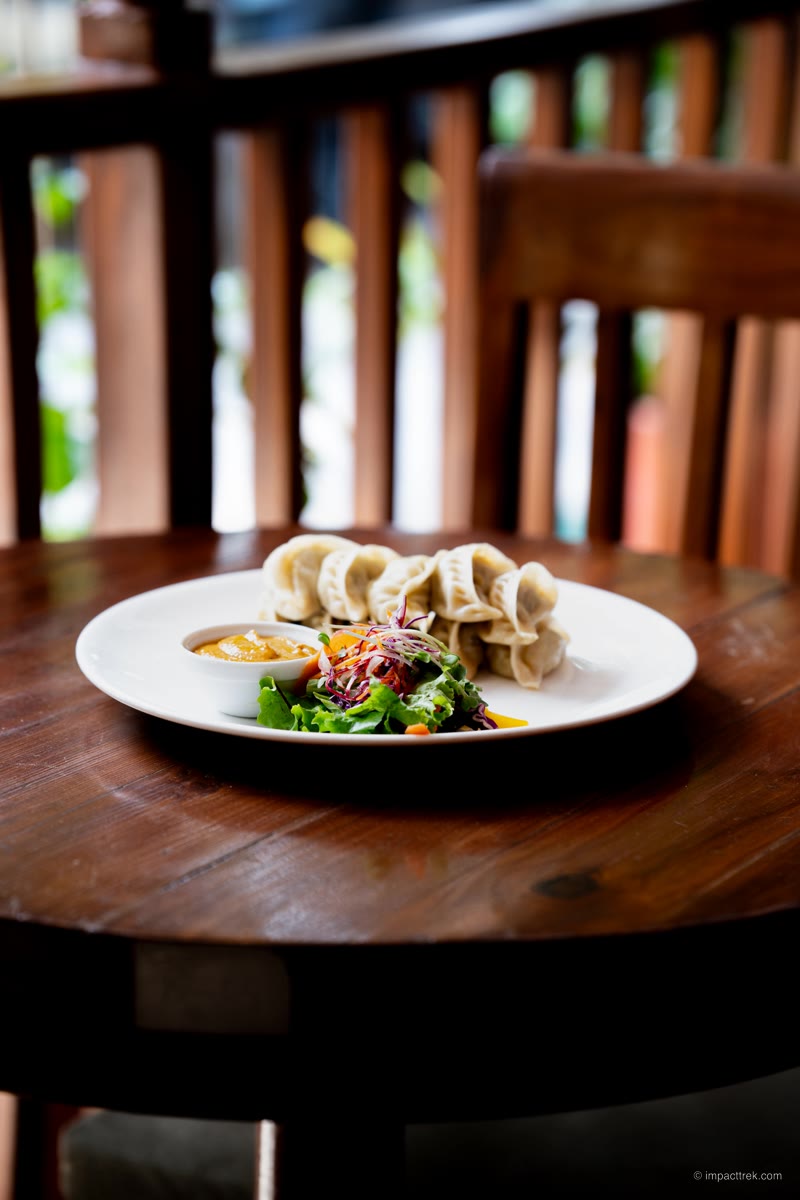
Where momo came from
The word "momo" is widely thought to come from Tibetan, and the dumpling almost certainly travelled into Nepal across the Himalaya through centuries of trade between the Kathmandu Valley and Tibet. The Newar merchants of the valley, who traded extensively with Lhasa, are often credited with bringing the dish home and adapting it to local tastes — swapping in the spices, herbs and fillings that make a Nepali momo taste distinctly Nepali rather than Tibetan.
How it became Nepal's comfort food
What began as a trade-route dish became, over generations, completely woven into everyday life. Momo crossed from the Newar kitchens of the valley into the wider Nepali table, and then into the streets. Today you'll find momo everywhere — steamed in bamboo baskets at roadside stalls, pan-fried in restaurants, served at weddings and festivals, and folded by hand at home whenever there's something to celebrate. For many Nepalis abroad, the smell of momo steaming is the smell of home. It's also why learning to fold them has become a fixture of a Kathmandu trip — there's a whole spread of classes on offer, and they vary a lot.
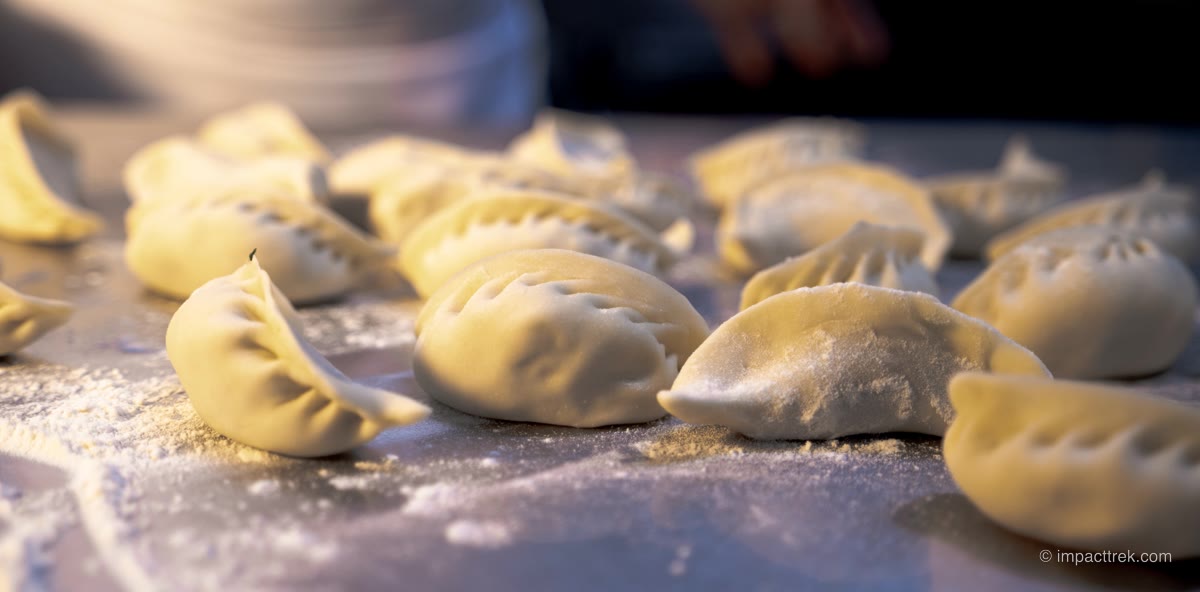
The main types of momo
- Steamed momo — the classic: soft wrappers, steamed in baskets, the everyday favourite.
- Fried momo (kothey) — pan-fried on one side for a crisp base, soft on top.
- Jhol momo — served swimming in a warm, spiced sesame-and-tomato soup; a Kathmandu speciality.
- C. momo (chilli momo) — fried momo tossed in a fiery, saucy stir-fry; a modern street favourite.
Fillings range from the traditional buff (water buffalo) and chicken to vegetable, paneer and vegan versions — but the soul of every momo is the spicing and the achar, the tomato-and-chilli dip served alongside.
Why momo means more than a meal
Folding momo has always been a shared activity. Families and friends gather around a table, roll wrappers, pleat and pinch, and talk while they work — the cooking is as much the point as the eating. That's why making momo, rather than just ordering them, gives you something a restaurant never can: the rhythm of the fold, the feel of the dough, and a small piece of how Nepali food actually lives.
Fold your own momo in Kathmandu
The best way to understand momo is to make them. On our hands-on Nepali momo cooking class in Kathmandu, chef Chhetra Shrestha — who runs four Kathmandu cafés — teaches you the dough, the spiced filling, the fold and the achar in a working café kitchen. It's a private class for your own group of 2–6 (your group cooks one filling — chicken or vegan): you sit down and eat what you made, and leave with a recipe card and a certificate. £35 per person. Travelling solo? We'll happily help you pair up — minimum two.
See the cooking class →A note on history: the precise origins of momo are debated and not fully documented; this account reflects the most widely told story of how the dish reached and evolved in Nepal.